The UK’s vehicle repair and salvage sector is facing a growing skills crisis that is pushing up insurance premiums, extending repair times and eroding consumer confidence, according to new research from Thatcham Research.
A survey of repair and salvage professionals, carried out in partnership with the Centre for Economics and Business Research, found that 73% of respondents see the widening skills gap as a major and escalating challenge requiring industry-wide action.
The problem has intensified as vehicles become more technologically complex, particularly electric vehicles (EVs) and models fitted with Advanced Driver Assistance Systems (ADAS). These systems require specialist knowledge and equipment, making repairs more time-consuming and costly.
Thatcham Research data shows that the average cost of collision repairs rose by 50% between 2019 and 2024, largely driven by technological advances and the need for highly trained technicians.
Dean Lander, head of repair sector services at Thatcham Research, said the sector is at a turning point.
“As vehicles become more sophisticated, the gap between the skills our industry needs and the talent available is widening,” he said. “This directly impacts insurance premiums, repair times and customer satisfaction.
“We’ve trained more than 5,000 technicians through our Automotive Academy in the past five years, but we need industry-wide commitment to investing in skills and creating attractive, sustainable careers.”
The survey found that vehicle complexity was only part of the problem. Around 43% of respondents said skilled workers were leaving for better opportunities in other sectors, while 31% pointed to the impact of an ageing workforce.
Training at the centre of the response
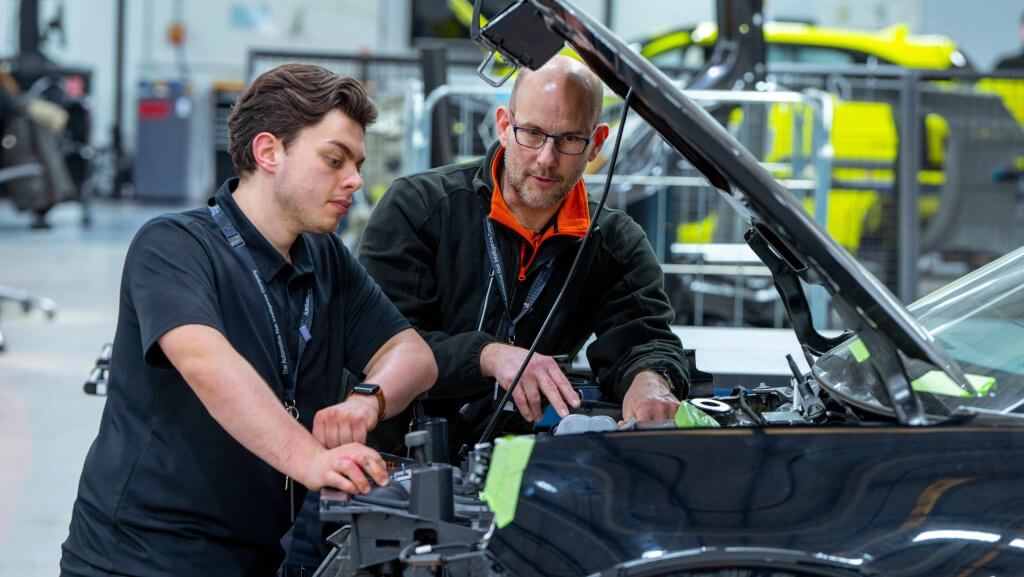
Thatcham Research says its Automotive Academy is playing a central role in addressing the shortage, offering apprenticeship and training programmes focused on future-ready skills.
These include EV systems, ADAS calibration, advanced repair techniques and improved damage assessment to reduce unnecessary write-offs. The Academy also supports the upskilling of existing technicians and aligns training with manufacturer repair standards.
In a traditionally male-dominated industry, progress has also been made on diversity. Almost 20% of the Academy’s autumn 2025 apprenticeship intake was female, reflecting efforts to widen participation and build a more inclusive workforce.
Call for greater investment and visibility
Respondents to the survey highlighted clear priorities for tackling the shortage. More than six in ten (61%) said apprenticeships need greater visibility in schools and colleges, while 48% called for increased investment in technical training.
Thatcham Research argues that closing the skills gap could deliver significant benefits, including faster and more accurate repairs, lower insurance costs, improved customer trust and stronger long-term career pathways.
The organisation is now urging insurers, repairers, manufacturers and policymakers to work together, following the publication of the government’s Motor Insurance Taskforce report.
Jonathan Hewett, chief executive of Thatcham Research, said the sector has a major opportunity to reshape its future.
“Young people today care about sustainability, technology and making a real difference. Automotive repair offers all three,” he said. “These skilled technical roles won’t be replaced by AI or automation.
“We welcome the government’s commitment to skills development, including the £100m engineering skills package. This is a significant step towards building the pipeline of talent our industry needs.”
He added that the Automotive Academy is ready to support this effort, ensuring the next generation of technicians is equipped to work safely and effectively on increasingly complex vehicles.
Industry experts warn that without sustained investment in people and training, skills shortages could become a long-term constraint on affordability, safety and service standards across the UK motor sector.